
What your policy covers — and what it does not
Every policy wording is different, and the schedule and endorsements matter as much as the booklet. But across the household and commercial policies sold in Ireland the pattern is consistent enough to say this much:
Usually covered
- Structural damage and full reinstatement
- Smoke and soot damage throughout the building, not only the room that burned
- Heat damage to what the flames never reached
- Water and foam damage from firefighting
- Contents, furnishings and specialist cleaning
- Alternative accommodation, debris removal and making safe
Usually excluded or argued
- Damage from a fire started deliberately by the policyholder
- Scorching without a fire on some policies
- Losses above the contents sum insured or single-article limits
- Chimney fires where the flue was demonstrably neglected, on some policies
- Business stock in a home without the right cover
The line between the two columns is exactly where a claim is won or lost, and it is drawn by the wording, the survey evidence and the argument — not by the insurer’s first letter.
The first 48 hours after fire and smoke damage
What is done — and not done — in the first two days decides how much evidence exists later. In order:
Do not clean, do not clear
Nothing goes in a skip until it is recorded. Smoke damage in particular disappears with the first wipe, and with it the evidence of how far it travelled.
Get the fire report reference
The fire service attendance is your evidence of the event. Ask for the reference and keep it with the claim file.
Photograph every room, not just the burnt one
Soot on the ceiling of the far bedroom is part of the claim. Record it before anyone opens a window and it fades.
Secure the property
Boarding up and making safe is claimable and is your responsibility under the policy. Keep receipts.
Sort out somewhere to stay — and keep the receipts
Alternative accommodation is covered under most household policies. It has to be claimed, and it is easier to claim with the invoices in hand.
Ring us before the adjuster's visit
Fire claims move fast. A scope agreed on a walk-round in week one is very hard to reopen in week six.
How the insurer will assess the claim
The insurer’s adjuster will usually visit within days and will want to agree a scope of works quickly. The pressure to agree is real — you want the house back — and it is where fire claims go wrong. Smoke damage gets treated as a cleaning job when it is frequently a strip-out and redecoration job. Contents that look salvageable often are not once the smell is in them. Alternative accommodation gets forgotten.
We survey before anything is cleared, schedule every head of loss, and put a priced reinstatement scope to the insurer as a document. The negotiation is then about the schedule, not about sympathy.
Under the Central Bank’s Consumer Protection Code your insurer must keep you informed of developments within 10 working days, tell you its decision within 5 working days of making it, and give written reasons if it does not settle in your favour.
Why fire and smoke damage claims get reduced or refused
These are the four positions we meet most often on this type of claim, what each one really means, and how it is answered.
“Smoke damage can be cleaned.”
What it means: The insurer is pricing a clean where stripping out is needed.
Our answer: Soot penetrates porous plaster, timber and soft furnishings. We evidence where cleaning will not restore the surface and scope the replacement.
“The contents are salvageable.”
What it means: The insurer is avoiding the contents sum.
Our answer: Specialist cleaning is tried where it can work; where smell and staining remain, the item goes on the schedule of loss at replacement value on the policy basis.
“The chimney was not maintained.”
What it means: The insurer is looking for a condition breach on a chimney fire.
Our answer: We establish the sweeping history and the actual cause, and put the policy’s condition against what actually happened.
“You can live in part of the house.”
What it means: The insurer is limiting alternative accommodation.
Our answer: A house with smoke damage through it and works under way is not habitable. We evidence why, and claim the accommodation the policy provides.
If the insurer’s final response is wrong, the complaint goes to the Financial Services and Pensions Ombudsman — free to you, and taken more seriously when the claim file is already properly documented.
What a proper settlement includes
A settlement is a schedule of every head of loss the policy responds to, priced at what it will actually cost to put right — not the first figure offered. On a claim like this that schedule should cover:
- Making safe, boarding up and securing
- Debris removal and disposal
- Structural repair and full reinstatement
- Stripping out and redecoration of smoke-damaged rooms
- Specialist cleaning where it will work — replacement where it will not
- Contents at the policy basis
- Alternative accommodation for the full works period
- Professional fees where the policy allows them
Our fee. No charge for the initial consultation. Our standard fee is 10% + V.A.T. of the settlement agreed, with a minimum fee explained before any work starts. The fee is agreed with you before any work begins.
Fire and smoke damage across Louth, Meath, Monaghan, Cavan and Dublin
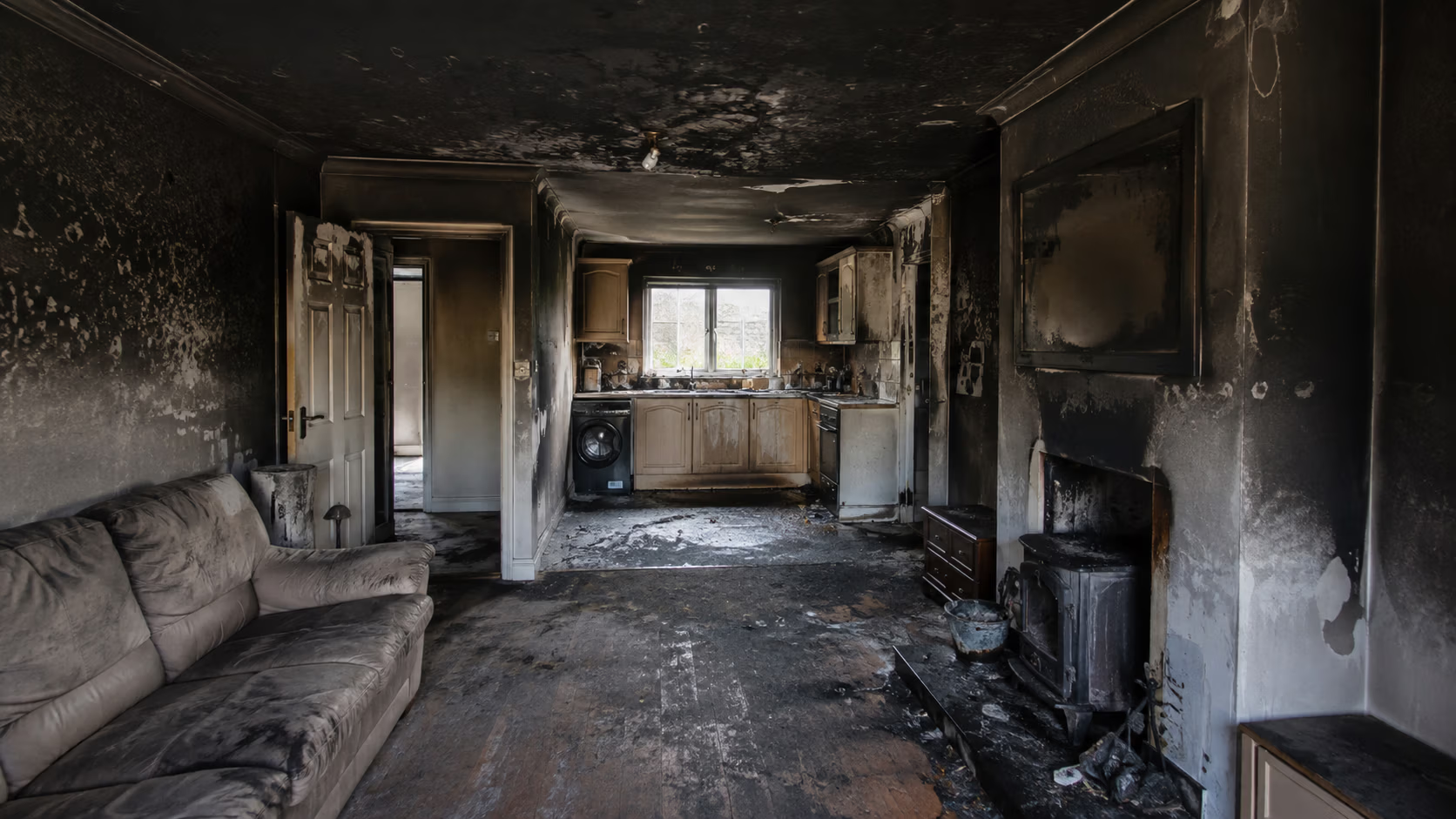
We work from two offices — Irish Grange, Carlingford, Co. Louth and Main Street, Blanchardstown, Dublin — and we are on site fastest across Louth (Dundalk, Drogheda, Ardee, Carlingford), Meath, Monaghan, Cavan, Dublin (Swords, Blanchardstown) and Kildare.
Chimney fires come with the housing stock and the heating across Louth, Monaghan and Cavan — solid-fuel stoves and open fires in older houses — and they are the fire claim we are called to most in the north-east.
Outside those counties, ring us anyway — on a serious claim the survey and the policy argument matter far more than the drive. Every area we cover.